
Nov. 12, 2026
When a CNC lathe’s parts slip, changeover takes too long, or the shop is unsure whether its existing utilities can support a new chuck, choosing between an Air Operated Collet Chuck vs hydraulic collet chuck becomes a practical production decision. This comparison covers a pneumatic collet chuck for CNC lathe work and a hydraulic collet chuck for CNC turning, with attention to CNC lathe workholding, bar feeder compatibility, collet clamping force, the drawtube, spindle, and runout. The right choice depends on the workpiece, machine configuration, production rate, and verified clamping requirements—not simply on which system develops higher pressure.
In brief, air-operated systems can be a sensible fit when the shop already has clean, stable compressed air and the required grip is achievable within the chuck manufacturer’s limits. Hydraulic systems are often preferred when a machine is already equipped for hydraulic actuation or when the application needs higher, controllable clamping force. Neither type is automatically more accurate or faster: chuck design, collet condition, installation, workpiece geometry, and machine settings all matter.

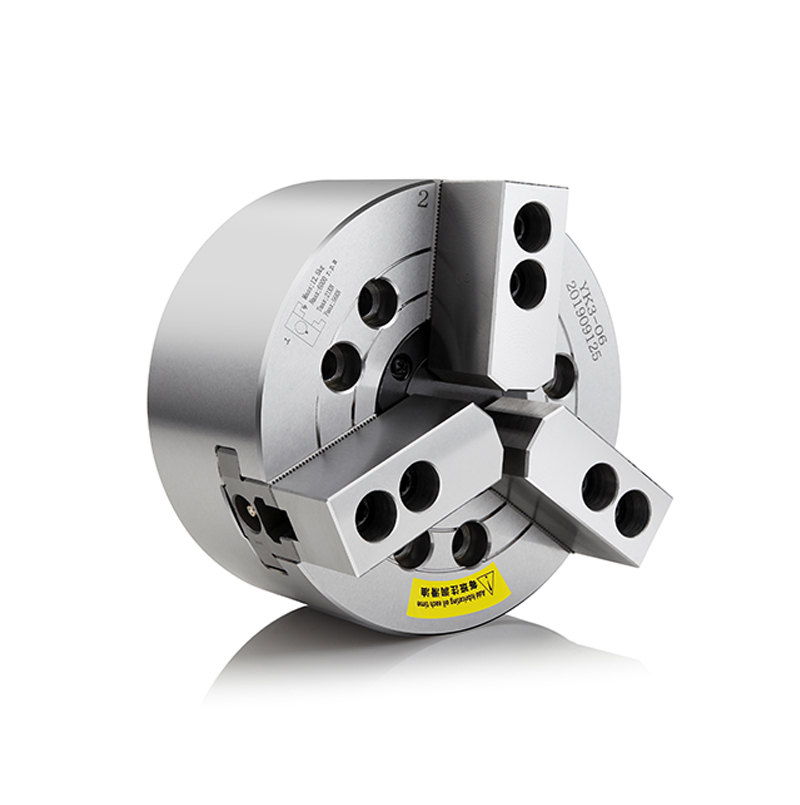
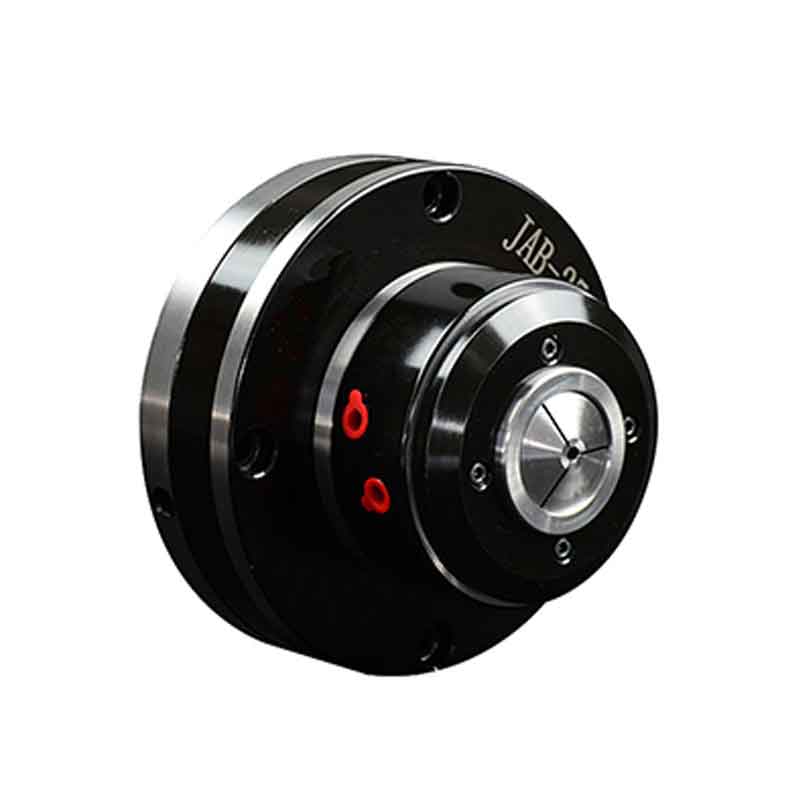
To make the comparison useful on the shop floor, start with the mechanism. An air-operated chuck uses compressed air to actuate a piston or cylinder connected to the chuck’s closing mechanism. A hydraulic chuck uses pressurized oil, commonly supplied by a hydraulic power unit, to move an actuator. In both cases, the actuator moves the drawtube or a related mechanism, which closes the collet around the stock. The chuck’s effective mechanical advantage, piston area, collet design, and setup determine the force at the workpiece; supply pressure alone does not.
| Comparison point | Air operated collet chuck | Hydraulic collet chuck |
|---|---|---|
| Actuation medium | Compressed air, commonly supplied within a shop-air range such as 0.5–0.7 MPa, subject to the chuck maker’s specification | Hydraulic oil; system pressure varies by design and machine, and must be taken from the equipment documentation |
| Clamping force | Depends on cylinder area, linkage, collet, and operating pressure; confirm the rated force for the exact assembly | Often capable of higher actuation force, but the usable workpiece grip still depends on the chuck, collet, and setup |
| Force adjustment | Typically adjusted through a regulator and monitored with suitable pressure sensing | Typically adjusted through hydraulic pressure controls and monitored through the machine’s hydraulic system |
| Utilities and integration | Requires properly filtered, regulated air and compatible machine controls | Requires a compatible hydraulic supply, plumbing, and machine integration |
| Maintenance focus | Air leaks, filter condition, regulator function, and moisture or condensate management | Oil condition, filters, seals, hose and fitting condition, and leak checks |
| Typical cost consideration | May cost less to integrate if suitable air and controls are already available; not guaranteed to be cheaper as a complete system | May add equipment and installation cost where no hydraulic system exists; can be economical when the machine already has one |
| Accuracy and cycle time | Not determined by actuation medium alone; measure the assembled system under production conditions | Not determined by actuation medium alone; measure the assembled system under production conditions |
These pressure figures are examples of common system ranges, not a universal chuck specification. Do not compare air pressure with hydraulic pressure as if they directly represented workholding force: hydraulic systems commonly operate at substantially different pressures, and actuator area and mechanical advantage change the output. Use the chuck maker’s rated clamping-force data and the machine builder’s limits. Excessive grip can deform thin-wall tubing or small-diameter stock, while insufficient grip can allow movement during cutting.
For the same reason, runout should be checked at the assembled machine rather than inferred from the actuation type. Collet cleanliness, correct collet seating, spindle condition, stock straightness, and repeatable drawtube travel can all affect total indicated runout. Record runout at the workpiece near the chuck and, where the part length requires it, farther along the stock. A dial indicator measurement after a tool change or collet change is more useful than assuming either pneumatic or hydraulic actuation guarantees a particular tolerance.
As the operating environment changes, the practical differences become clearer. An air-operated arrangement may suit a shop with reliable compressed air, regular collet changes, moderate grip demands, and operators who benefit from simple pressure adjustment. It also needs air quality and pressure to remain stable: a leaking line, a clogged filter, or water in the supply can affect operation. A hydraulic arrangement can be a better match for an existing hydraulic CNC lathe, demanding cuts, or a process requiring a greater force range, provided the machine and chuck are designed for it. Oil leakage, seal wear, and hydraulic-unit maintenance then become part of the ownership calculation.
Bar feeding is another point to check before ordering. Confirm that the chuck and actuator suit the spindle bore, bar diameter, drawtube dimensions, bar feeder interface, and the machine’s required open-and-close sequence. Ask whether the proposed package supports the intended stock range and whether guarding, interlocks, and pressure monitoring are included or need to be supplied separately. A chuck that can clamp the part but conflicts with the feeder or spindle arrangement is not a workable production solution.
Price is best assessed as installed cost over the expected service period, not as the chuck’s catalog price alone. Request separate quotations for the chuck, actuator, adapter or mounting components, rotary union if required, control valves, sensors, plumbing, installation, and commissioning. Then compare recurring costs such as energy, maintenance, consumables, and any production losses during service. If a shop already owns a suitable hydraulic system, a hydraulic option may have a lower incremental cost than adding one from scratch. If suitable regulated air is already available, air actuation may avoid some hydraulic equipment costs. The machine configuration can reverse either conclusion.
A simple payback calculation can make a price discussion concrete without pretending that one purchase price applies to every lathe. Suppose a shop receives a verified quotation showing that a hydraulic upgrade costs $4,500 more than an air-operated alternative. If a measured trial demonstrates $300 per month in net savings from reduced scrap or other documented operating costs, the simple payback is 15 months: $4,500 divided by $300. This is an illustrative calculation, not a market-price claim or a reported customer result. If the savings have not been measured, treat them as an assumption and test them before using the figure to justify the purchase.
For a practical selection exercise, consider a small turning shop running a bar-fed job on an existing CNC lathe. The owner should record the workpiece material and diameter, cutting loads, part-wall thickness, required tolerance, current scrap rate, changeover time, available air and hydraulic utilities, and the machine’s drawtube limits. The shop can then trial each technically compatible setup using the same stock, collet condition, toolpath, and measurement method. Compare part movement, dimensional results, pressure stability, changeover time, and maintenance needs over a defined production run. This is a worked decision method, not a claim about a specific customer or a fabricated testimonial.
Operator feedback is valuable, but it should be separated from verified performance data. In day-to-day use, operators commonly focus on whether the chuck opens and closes consistently, pressure is easy to check, collets are straightforward to change, and leaks or alarms interrupt the shift. Those comments can identify usability problems; they do not establish a quantified accuracy or productivity advantage. Ask operators to log stoppages and setup issues, then compare the records with measured scrap, cycle time, and maintenance data. That gives purchasing teams a more reliable basis than unverified online praise or a single anecdote.
For a balanced shortlist, rank the options in this order: first, select only a chuck and actuator approved for the lathe and workpiece; second, choose the system that meets the required grip with a suitable safety margin and without distorting the stock; third, compare installed and lifecycle cost using shop-specific quotations and operating records. Air operation deserves priority when compatible air is already available and its rated force meets the job. Hydraulic operation deserves priority when the machine already supports it or the verified application demands its force range. If neither system meets the required grip or interface constraints, ask the chuck supplier and machine builder about another approved workholding configuration.
DRAKE can be included in a supplier comparison when its equipment matches the machine interface and application, but evaluate it by the same criteria as any other manufacturer: documented clamping-force data, compatibility, runout requirements, service support, spare-part availability, and a complete installed quotation. Request written confirmation for the exact lathe model and workpiece range rather than relying on a general product description. A sample installation or a supervised trial is useful when the job is high-value or sensitive to stock deformation.
Ultimately, an air operated collet chuck is most suitable for shops with stable compressed air, compatible controls, and work that falls within the chuck’s documented clamping limits. A hydraulic collet chuck is often more suitable for hydraulic-ready machines or applications needing a greater verified force range. Neither is a universal upgrade, and neither should be selected on pressure, price, or marketing language alone. Before requesting a quotation, prepare the lathe model, spindle and drawtube details, bar diameter, material, cutting conditions, tolerance, and expected production volume. Those details let a supplier confirm fit and help you compare an air operated collet chuck vs hydraulic collet chuck on the points that matter: CNC lathe workholding, bar feeder compatibility, collet clamping force, drawtube travel, spindle fit, and measured runout.
Previous: None
Next: China Collet Chuck Supplier Selection Guide for Global CNC Buyers